
Boardinghouse Retrospective
Five years of boardinghouses

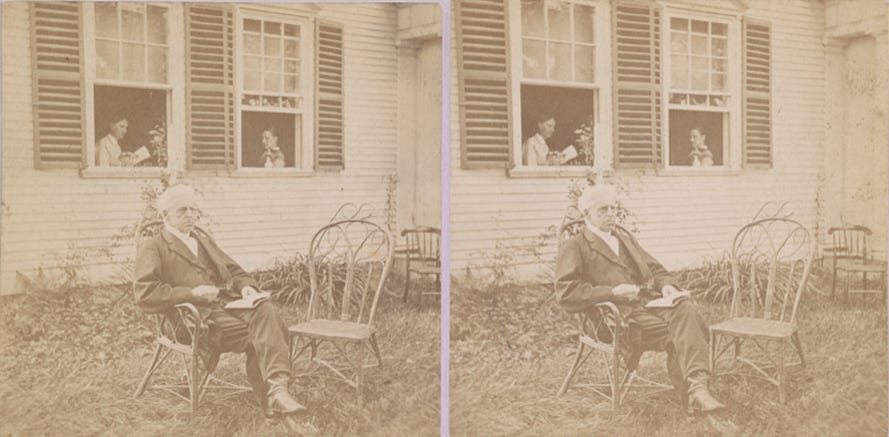
Image 1. French & Sawyer, “Harris & Co.’s new boarding house,” c1860s. Image source: Library of Congress, Digital Archives.
Much of the boardinghouse research presented on What Are Streets For is the fruit of the manuscript, Lodging in Houston: Residential Hotels, Boarding Houses, and Restaurants, 1837–1877. The first draft, completed in August 2021, was poorly organized and lacked a clear thesis. Yet I continued researching and re-writing the chapters while I sent this idea out as a book proposal. I also stripped out three pieces from this manuscript and rewrote them as essays and submitted them to journals.
A few early posts on What Are Streets For were brief think-pieces on residential boarding research. These included “Residential Hotels and Boarding Houses,” which explained why Victorian workers needed boarding and not apartments:
“What we call an apartment is presumed to include a bathroom and a kitchen. Victorian workers typically could not afford the space required for a kitchen, nor did they have the capital required to purchase kitchen equipment. Victorian workers could not afford a kitchen, nor did they have use for them.”
“Boarding Houses, Households, Homes, and Families” considered how the common table promoted commensality:
“First, a boarding house was a house divided into rooms for sleeping and privacy. Sometimes boarders had private rooms; sometimes they shared rooms. However, boarding houses also had a semi-public realm. Boarders shared use of common areas, including the parlor and the dining table. In these areas, they socialized with their housemates (or ‘inmates’). Dining at the table of the host, or at the table d’hôte, brought together the housemates to eat the same food at appointed times.”
The third of these early think-pieces was “The Language of Housing in Houston.” I re-wrote this as an essay and submitted it to journals. It was reviewed and rejected for publication by three journals. Meanwhile, I updated this idea in 2025 in the article, “The Language of Nineteenth-Century Housing.” After receiving the third rejection, I re-wrote and republished it as a series, with first titled, “What Is a “House?” The Language and Uses of Housing in Mid-Nineteenth-Century Houston, 1837–1880: Thesis.”
“This paper starts with detailed analysis of the use of house in mid-nineteenth-century newspapers published in Houston. Commonly house was used synonymously with the present-day use of building. This study also considers house compounded or qualified, as in courthouse, warehouse, and dwelling house, for just a few examples. Since the period studied here runs from 1837–1880, it is sensible to call this time Victorian, as well as using this as a noun for the people living at that time. This stipulation avoids many awkward expressions. Victorians, thus understood, sometimes distinguished buildings by use and compounded these words for uses with house to refer to a kind of building. Yet Victorians used house freely as part of a dispositional flexibility that was also a reflection of buildings which were themselves often poorly distinguished in design and form.”
Another finding of this research was restaurants as residential boarding in nineteenth-century Houston. For example, an Irish immigrant, Joseph Blessington ran “Our House” restaurant as a residential boarding venue:
“Restaurants featured prepared meals and the few examples in 1870 Houston suggests that their sometimes their lodging facilities were limited, and mainly housed employees. However in 1870, “Our House” restaurant in Houston housed the owner, his wife, a teenaged son, three restaurant workers, and fourteen boarders, with their occupations ranging from common laborer to lawyer. With twenty persons residing in the restaurant, it housed more people than some local hotels, but far fewer people than a hotel which was a little more than a block away.”
The problem of studying early boardinghouses is a lack of good record sets. From 1837 through 1865, records for boardinghouses are limited. The Portal to Texas History newspaper archives contain a wealth of information for this period. For Houston, the Telegraph and Texas Register (Houston) published under various mastheads throughout this period. Morning Star (Houston) published advertisements for boardinghouse and other residential boarding venues, but it there are only issues for a few years. However, in order to learn about who lived in boardinghouses, city directories and census records are needed. The first US census recording the identities of all free residents of the household was the Seventh Census in 1850. Yet the canvasses of Houston were of poor quality and boardinghouses and other group quarters were often missed. Location cannot be determined through the 1850 census. The Eighth Census in 1860 was better, but still lacking.
The first city directory for Houston was published in 1866. Not everyone published their information in the city directories, even women who were running boardinghouses. It is not known what percentage of boardinghouse residents published their information in the city directories. The Ninth Census in 1870 was a substantial improvement over the previous two, and residential locations can be inferred from the 1869 Wood Map and the 1870 city directory. The 1870 city directory also includes a classified business directory. Yet many boardinghouses were probably missed in the 1870 canvass, too.