
Elizabeth E Hay, Boardinghouse Keeper and Boardinghouse Client
Outliving three husbands

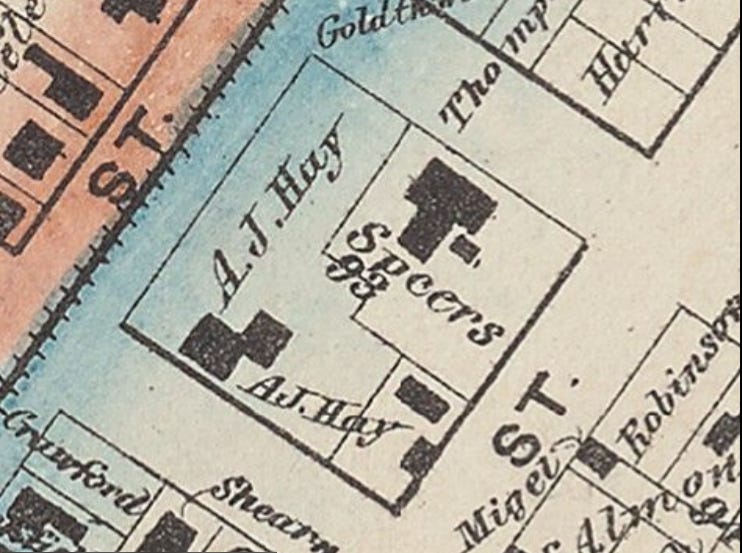
Image 1. W. E. Wood, “Map of the City of Houston, Sheet 4,” 1 January 1869. The Hay homestead on Block 93, bounded by Main Street to the west, Fannin Street to the east, Walker Avenue to the south, and Rusk Avenue to the north. Image source: Beinecke Rare Book and Manuscript Library, Yale University, Digital Archives.
Elizabeth Hay was born in the early 1820s as Elizabeth Evelyn Graham. On 28 May 1838, she married Augustus M Tomkins in East Carroll, LA. They resided in Houston, where he was the county district attorney. Augustus Tomkins, Jr was born around 1840. The district attorney died sometime in 1843.1
Elizabeth Tomkins, who survived her husband with one son and possibly a total of three children, married Alexander Wray Ewing (1809–1853) on 4 October 1844. Ewing was a physician and is best known for treating General Sam Houston on the battlefield at San Jacinto. John W Bergin, the Assistant Marshall charged with conducting the US census in Houston, found the Ewings on 4 September in Dwelling 83. Residing in the house was also Elizabeth’s son Augustus Tomkins and another son, Alex Ewing. The elder Alexander Ewing owned twelve enslaved persons.2
Katherine Lubbock “Kate” Ewing was born on 1 June 1852. Alexander Ewing, Sr died on 1 November 1853. While preliminary estate inventories were often overoptimistic in their valuations, an initial inventory of mostly real estate was valued at over $14,000. These assets included large rural tracts in Harris, Milam, Fayette, Gonzalez, and Bexar counties. The Ewing homestead encompassed half the lots on Block 93, which was bounded by Main and Fannin streets, and Rusk and Walker avenues. The initial valuation estimated the worth of the Ewing homestead at $4,000. The inventory of the estate was reassessed in May 1855, in which there was slightly different description of the homestead, but assessed at only half the initial valuation. In this description of the homestead, included were Block 93, Lots 1–2, 6–7, and 12: five lots instead of six. Lots 8–10 were assessed separately from the homestead at $1,000. As the probate case dragged into late 1856, Elizabeth married another physician, AJ Hay. The Hays resided on the Ewing Homestead on Main Street at Walker. During the final hearing of the probate case in 1857, the judge acknowledged several errors in the assignment of properties.3
Dr Hay remains largely a mystery. Their household is not recorded in the census for the Third Ward in 1860, which would have offered clues to his age and place of birth. In 1866 and 1867, he worked out of the JC Conliff drug store. No records are found for him after 1867. Presumably, he died sometime between the canvass for the 1867 city directory and the canvass for the 1870 census. In the 1870 city directory, Elizabeth Hay listed her residence as a boardinghouse at 167 Main (Image 1-3). The census canvass, which usually trailed the city directory canvass by several months within the decennial year, recorded three boarders at Mrs Hay’s house. Also residing there were three daughters of Dr Hay, two grown Ewing children, and four black servants. Elizabeth Hay declared total wealth of $13,500.4
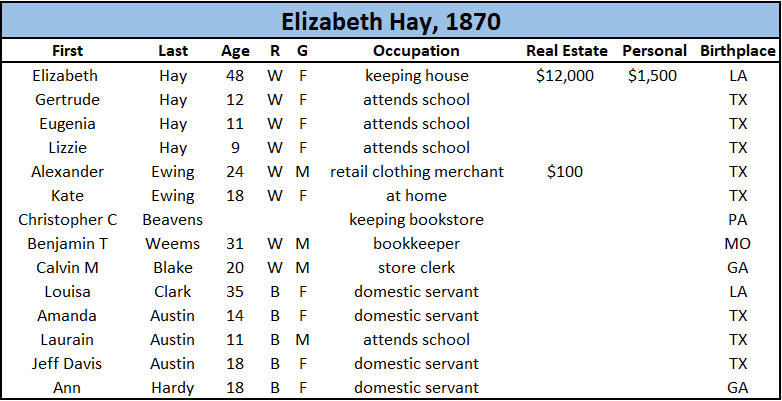
Image 2. The Elizabeth Hay boardinghouse according to the 1870 US census. Chart by author.
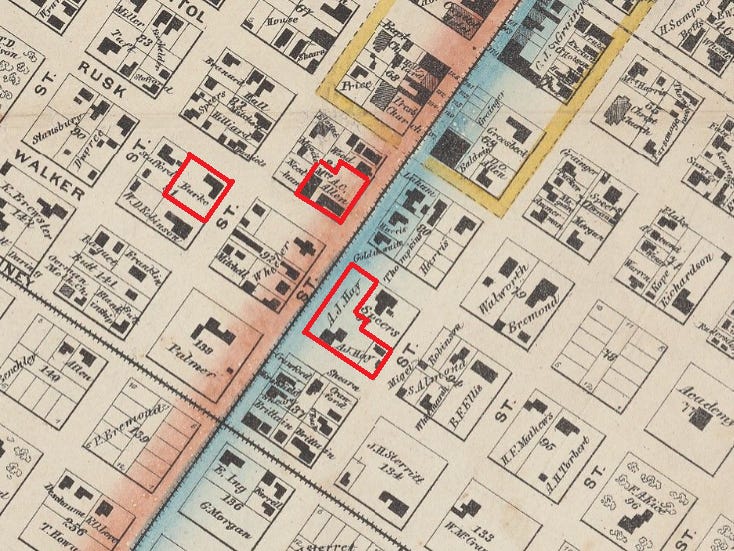
Image 3. W. E. Wood, “Map of the City of Houston, Sheet 4,” 1 January 1869. The Elizabeth Hay boardinghouse on Walker Avenue, between Main and Fannin streets. The three known boardinghouses in this neighborhood in 1870 are outlined in red. Image source: Beinecke Rare Book and Manuscript Library, Yale University, Digital Archives. Annotated by author.
There is no evidence that Elizabeth Hay persisted in the business long or ever accepted a large number of boarders. In fact, there is only direct evidence that she operated a boardinghouse in 1870. However, since boardinghouse keepers did not always publish their services, we cannot rule out her persistence in the business. As city directories for Houston trended toward to publish an inscrutable system of addresses by street number, Hay’s residence was known both as 167 Main and 173 Walker. The 1880 census, however, located Hay at 172 Walker, with Jacob Harby listed as head-of-house (Image 4). The city directory confirms “Jack Harby” at 172 Walker, but gives Hay’s address as 173 Walker. The census record includes Harby, his wife and their two children; two cooks and a house servant, and two roomers. Hay, at that time 59-years-old according to the census, was listed as a housekeeper by occupation. Her two daughters, Eugenia and Elizabeth were aged 20 and 18, respectively, and resided in the house.5
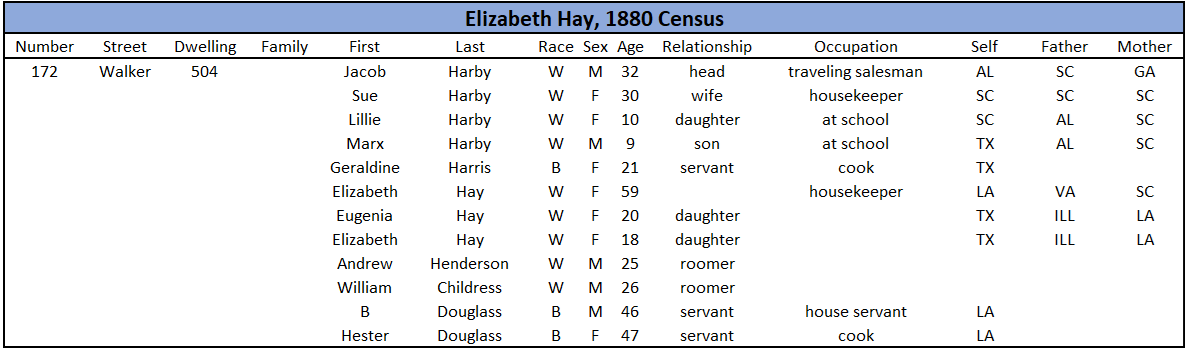
Image 4. The Jacob Harby household according to the 1880 US census. Chart by author.
In 1882, 1884, 1886, and 1887, the city directories listed the widow Mrs AJ Hay, either at 173 Walker or on the north side of Walker between Main and Fannin. There was no listing for her in 1889, 1890, 1892, or 1894. Hay resided in a boardinghouse in 1895 at 1203 McKinney Avenue (Image 5). She boarded at Miss Mary Campbell’s house located on Rusk Avenue at Main in 1899, adjacent to the First Baptist Church and the Mason’s Block (Image 6). Hay remained at the same house for part of 1900, where she was joined by her daughter, Lizzie Hay. On 12 June, Elizabeth and Lizzie were boarding with the Dunlop family in a remotely located house on San Jacinto at McGowen (Image 7). They had returned to the boardinghouse on McKinney by 1902. Mother and daughter disappeared from the city directories after 1902, but Lizzie reappeared in Houston in 1911.6
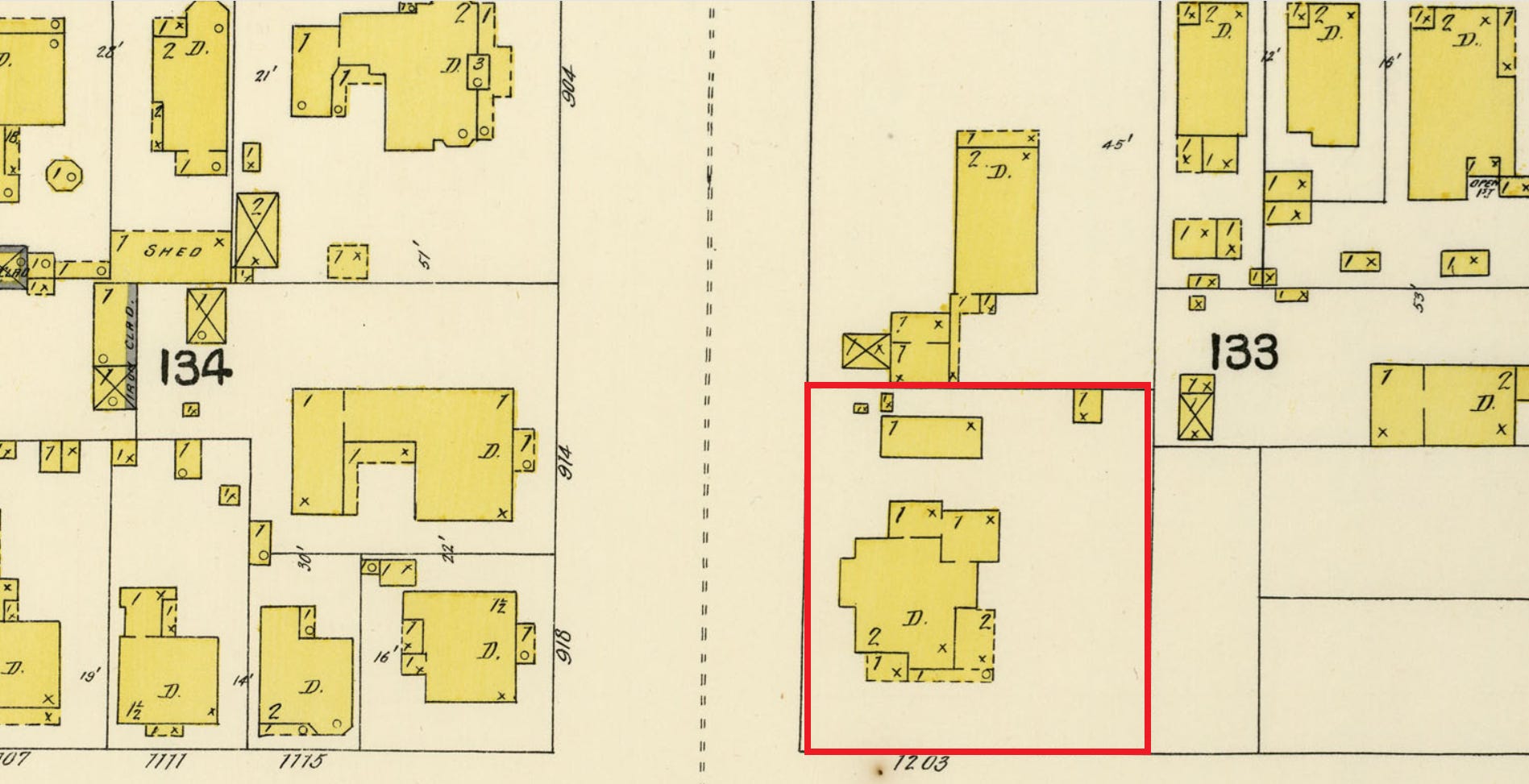
Image 5. “1896 Sanborn Map, Facet 22.” Hay resided at the northeast corner of McKinney Avenue and San Jacinto Street in 1895. Image source: Perry-Castañeda Library Map Collection, University of Texas, Digital Archives. Annotated by author.
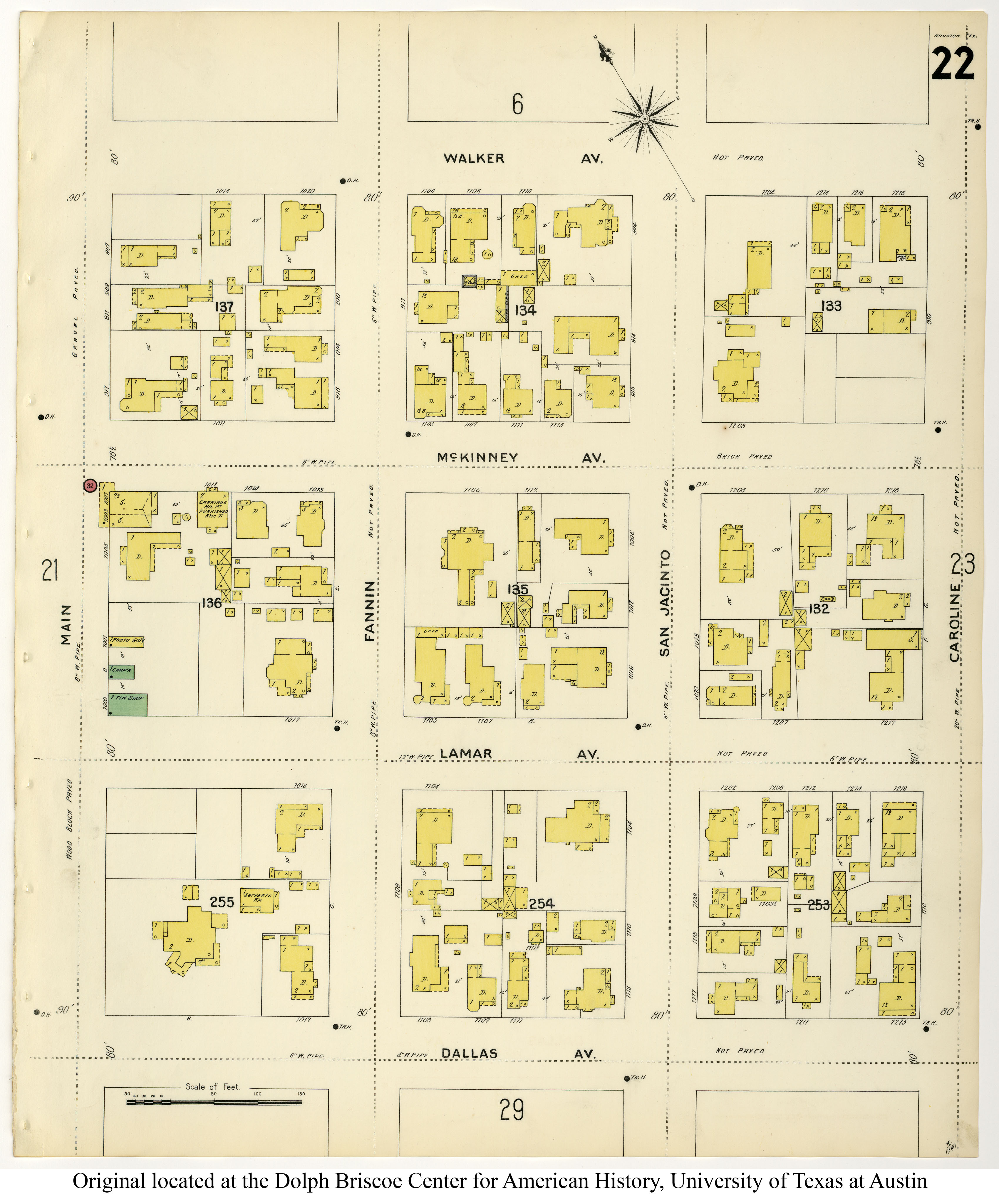
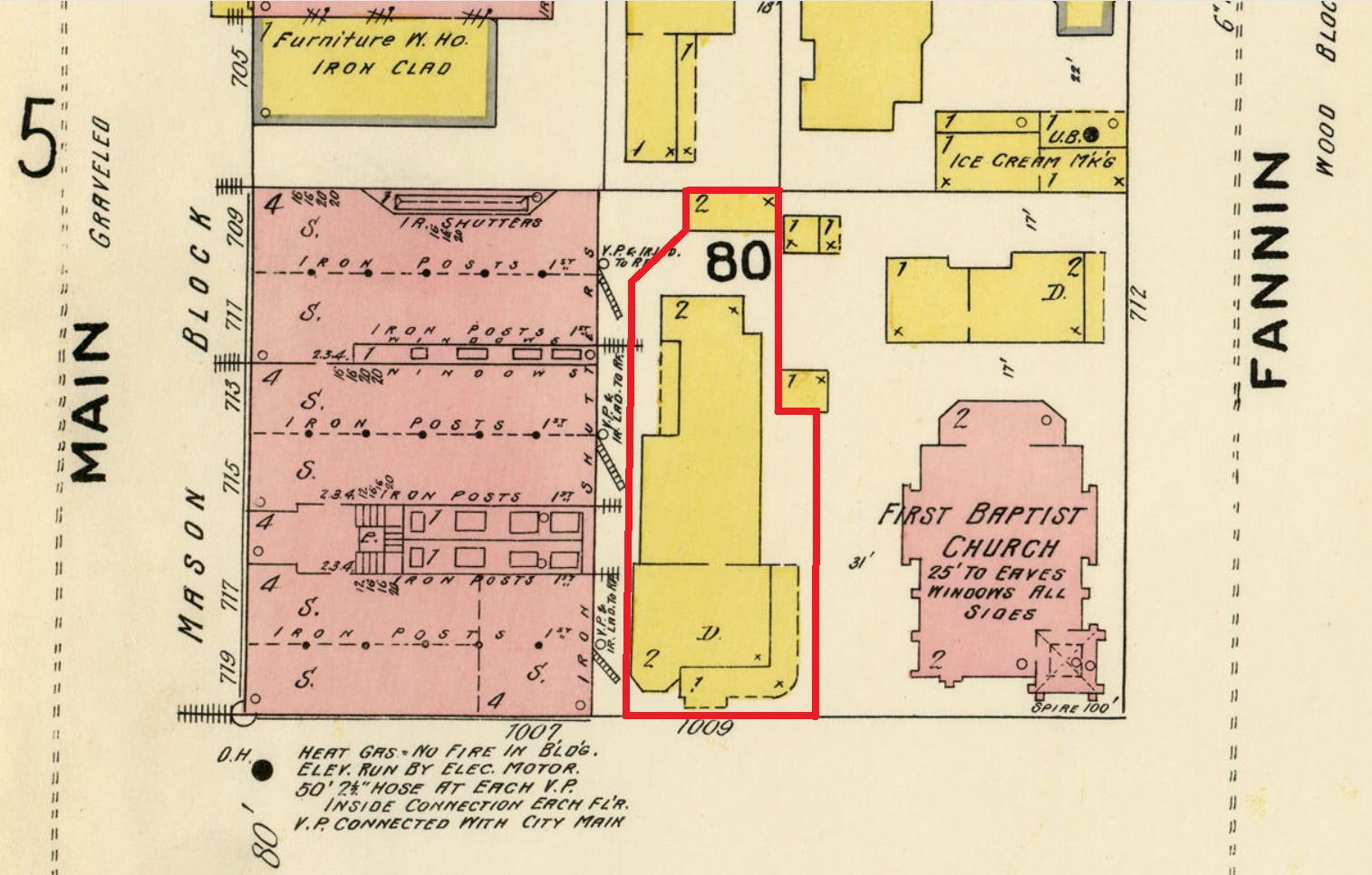
Image 6. “1896 Sanborn Map, Facet 6,” Hay resided the northeast side of Rusk Avenue in 1899. Image source: Perry-Castañeda Library Map Collection, University of Texas, Digital Archives. Annotated by author.
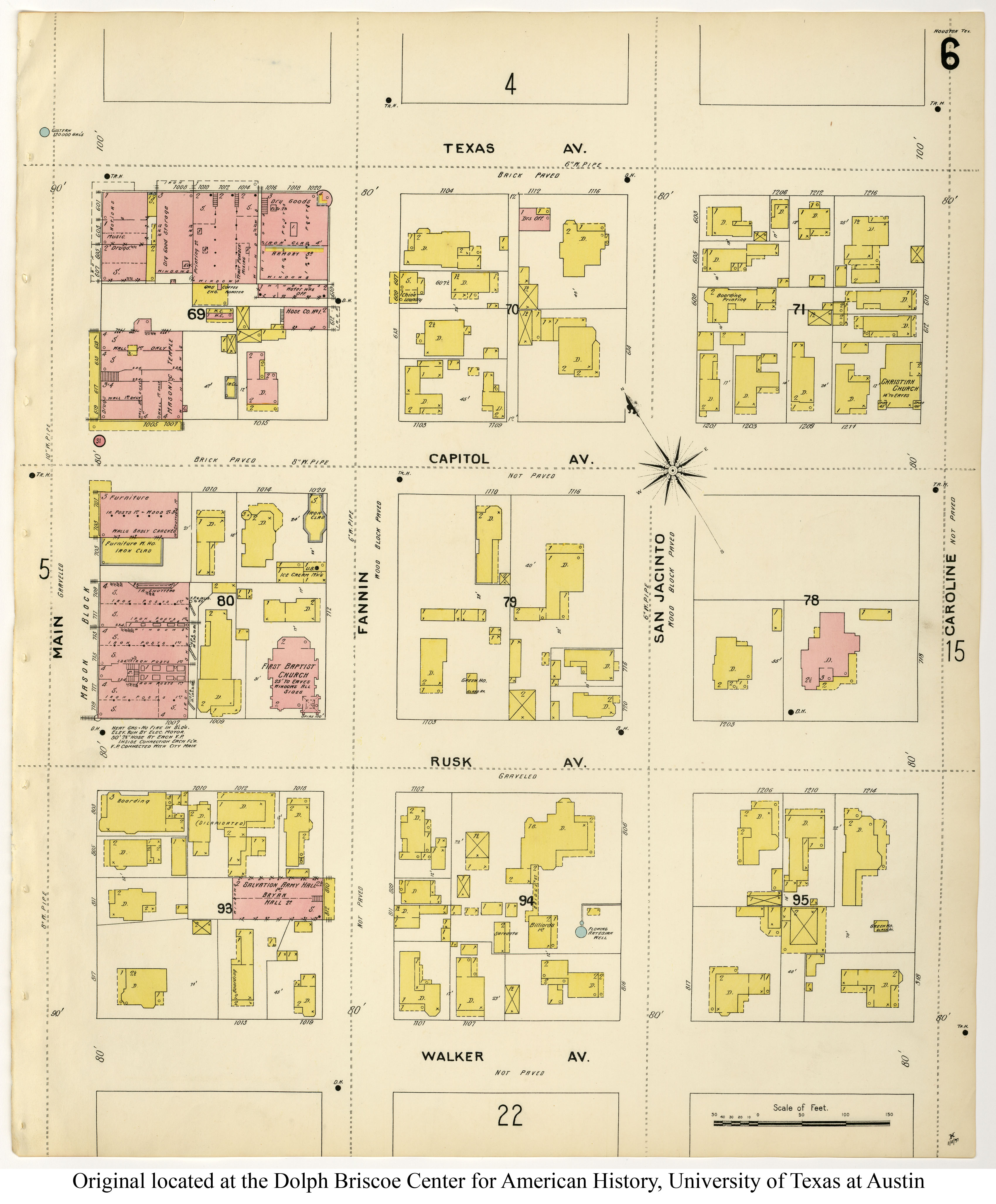
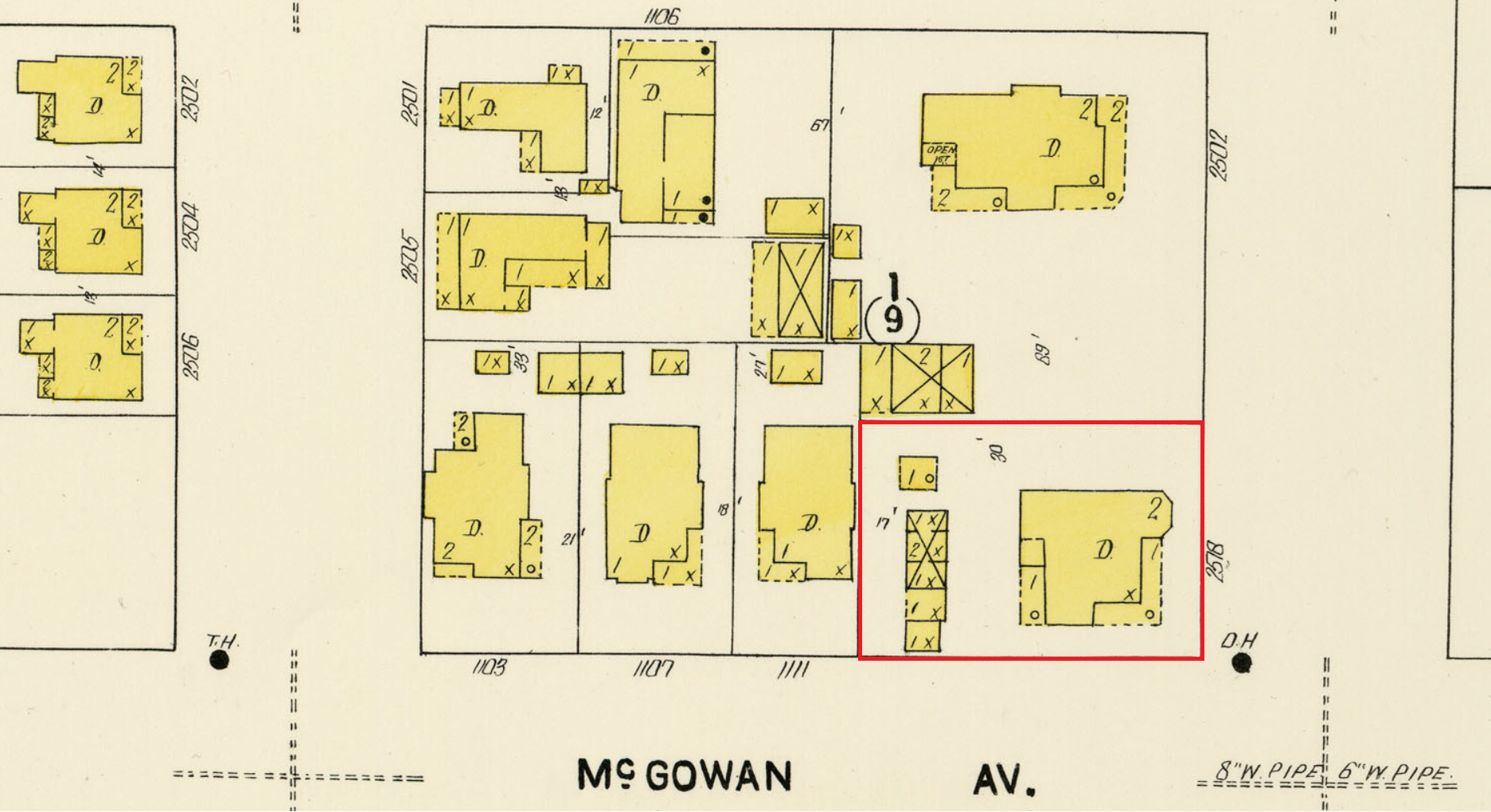
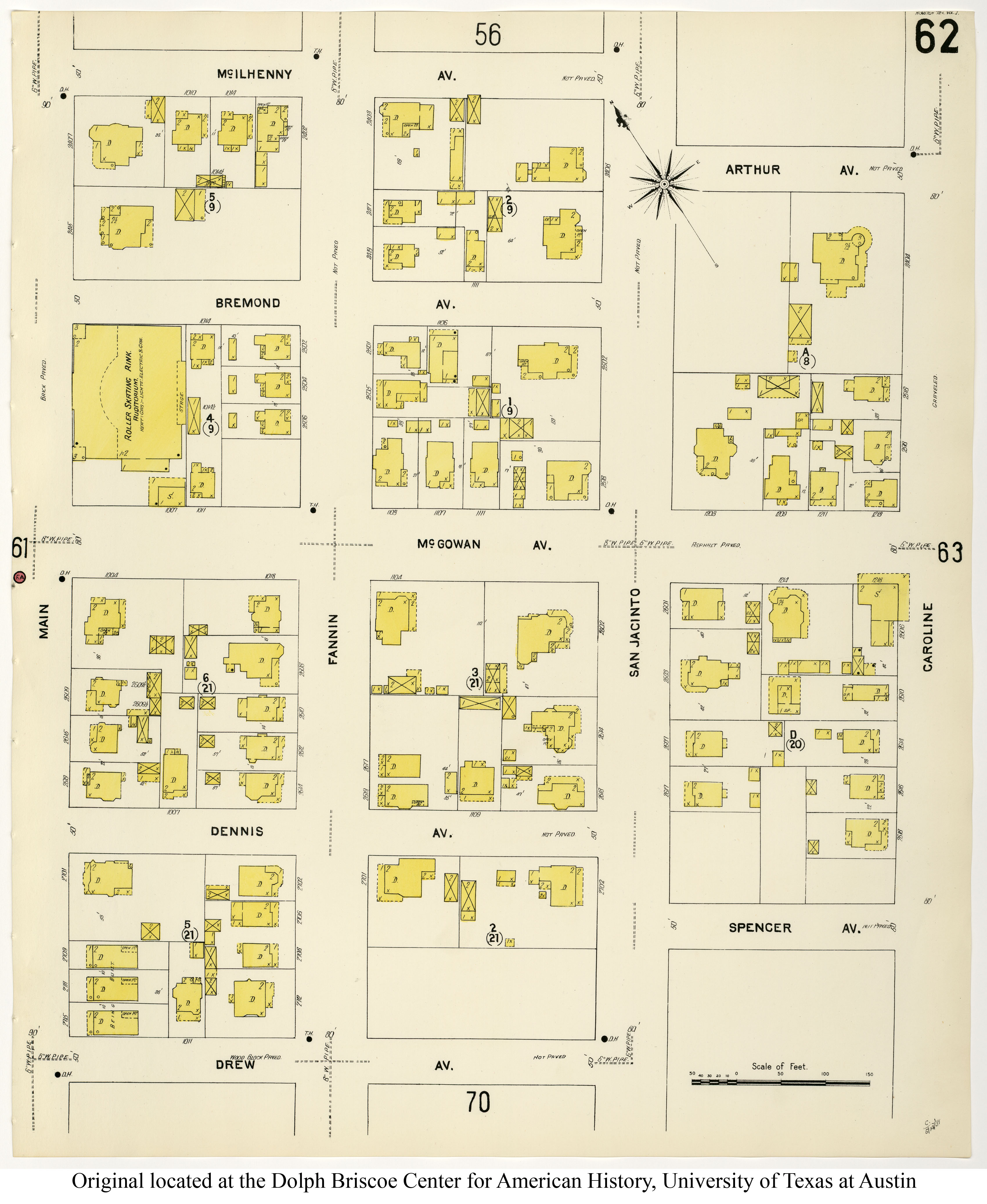
Image 7. “1907 Sanborn Map, Facet 62,” Hay resided the northwest corner of McGowan Avenue and San Jacinto Steet in 1902. Image source: Perry-Castañeda Library Map Collection, University of Texas, Digital Archives. Annotated by author.
Other Hotel and Boardinghouse Biographies
Andreas Sens and Charles Bente, Houston Hotelkeepers
William Dissen, Houston Hotelier
John Lyons, Grocer and Hotelkeeper
William J Hutchins, Merchant, Investor, and Hotelier
Elizabeth’s implied birth-year was reported variously throughout her life. Based on my research, she was as young as fourteen and as old as nineteen when she married Tomkins. Diana J. Kleiner, “Augustus M. Tomkins: Lawyer and District Attorney in Early Texas,” updated 14 July 2017, Handbook of Texas Online; Andrew Forest Muir, “Augustus M. Tomkins, Frontier Prosecutor,” Southwestern Historical Quarterly 53, no. 3 (1950): 322–3; Marriage, Elizabeth E. Graham Augustus M. Tomkins, 26 May 1838, Louisiana Marriage Index, Ancestry [subscription required].
Robert Brewster, “Alexander Wray Ewing: Pioneer Texas Doctor and Surgeon General,” 1952, updated 14 October 2025, Handbook of Texas Online. Seventh United States Census (1850), “Alexander Ewing,” Population Schedules, Free Inhabitants, 4 September 1850, Houston, Texas, Ancestry [subscription required]; Seventh United States Census (1850), “Alexander Ewing,” Slave Schedules, 2 September 1850, Houston, Texas, Ancestry [subscription required].
Estate of Alexander Ewing, Harris County Probate Records, Vol. K, pp. 360–9, 630–2, Ancestry [subscription required].
W. A. Leonard, comp., City of Houston City Directory for 1866 (Houston: Gray, Strickland & Company, 1866), 17, 27, Houston History Research Center; W. A. Leonard, comp., Houston City Directory for 1867–8 (Houston: Gray, Smallwood & Company, 1867), 20, 35, Houston History Research Center; General Directory for the City of Houston, 1870–71 (Houston: 1871), 38, Houston History Research Center; Ninth United States Census (1870), Population Schedules, 14 July 1870, Houston, Third Ward, Ancestry [subscription required].
Tenth United States Census (1880), Population Schedules, “Jacob Harby,” 19 June 1880, Houston, Third Ward, District 0075, Ancestry [subscription required]; Morrison & Fourmy, comp., General Directory for the City of Houston for 1880–1 (Houston: Morrison & Fourmy, 1880), 156.
Morrison & Fourmy, comp., General Directory for the City of Houston for 1882–3 (Houston: Morrison & Fourmy, 1882), 166; Morrison & Fourmy, General Directory for the City of Houston for 1884–1885 (Houston: Morrison & Fourmy, 1884), 162; General Directory for the City of Houston for 1886–87 (Houston: Morrison & Fourmy, 1886), 156; Morrison & Fourmy, comp., General Directory for the City of Houston for 1887–8 (Houston: Morrison & Fourmy, 1887), 168; Morrison & Fourmy, comp., General Directory for the City of Houston for 1895–6 (Houston: Morrison & Fourmy, 1895), 185; Morrison & Fourmy, comp., General Directory for the City of Houston for 1899 (Houston: Morrison & Fourmy, 1899), 129; Morrison & Fourmy, comp., General Directory for the City of Houston General Directory for the City of Houston for 1900–01 (Houston: Morrison & Fourmy, comp., 1900), 144, 429; Twelfth United States Census (1900), Population Schedules, 12 June 1900, Houston‚ Third Ward, District 0078‚ Ancestry [subscription required]; Morrison & Fourmy, comp., General Directory for the City of Houston, 1902–03 (Houston: Morrison & Fourmy, 1902), 205.