
Residential Boarding at Breweries
A work-residence option for brewery workers

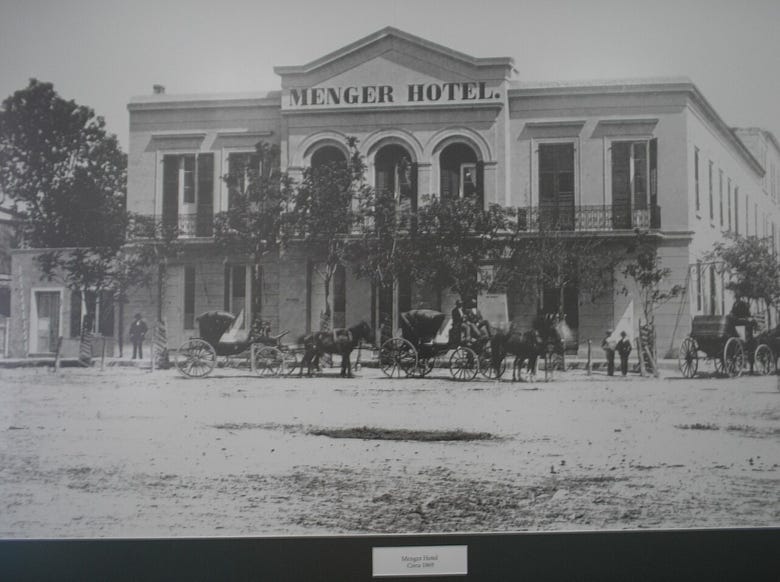
Image 1. Ted Ernst, “Menger Hotel San Antonio Texas photo of historical photo,” 14 November 2005, Photo. Image source: Wikipedia Commons, Creative Commons Attribution-Share Alike 2.0 Generic License.

Nineteenth-century breweries sometimes lodged and boarded people within the brewery complex. Although this has drawn mentions by historians, nobody has studied this social phenomenon with sufficient depth or breadth. What follows are summaries of two Houston breweries in front of the paywall and breweries in San Antonio, St Louis, and Washington behind the paywall.
Gabel Brewery
Peter Gabel started the first German brewery in Houston as early as 1849. Despite the substantial German population in the city, Houstonians did not consume much beer from 1837 through the 1840s. Instead, drinkers in the Bayou City consumed mostly wines, but also many spirits. When beer was evident, these were porters and ales.1
Gabel was the first Houstonian known to brew a lager. Although Gabel attempted to practice brewing himself, his business did not thrive until he hired a new brewer, Henry Schulte. Like Gabel, Schulte was a Bavarian and a cooper. Gabel hired Schulte away from a local company that sold spring water by the barrel.2
While there is no evidence that Gabel advertised his residence and brewery as a boardinghouse or that this was even widely known, he lodged and boarded six employees. These included a brewer with a wife and young child, three other brewers, a barkeeper, and a common laborer. There is no reason to believe that Gabel boarded employees at any other time in the 1860s, -70s, or -80s.3
Henry Schulte Brewery
After a few years as a successful brewmaster, Schulte left Gabel and started his own brewery at the abandoned arsenal property in the Second Ward, near Frost-Town. By 1855, Schulte sold the brewery at the old arsenal to Martin Floeck. Schulte established a new brewery on Commerce Avenue between San Jacinto and Caroline streets. Within six years of the founding of the Gabel Brewery, Houston could boast of three German breweries, all within a reasonable walking distance of each other. Schulte did not advertise lodging or board, so there is no evidence that there was a boardinghouse or hotel on the property at first. Schulte, however, did lodge some of his employees in 1860, although there is no certainty that his residence was at the brewery. During the census, Schulte was 34-years-old and claimed $24,500 in total wealth. It appears that he was married and had two young children. Residing in the Schulte household were also five probable employees. These included a barkeeper, a carpenter, a machinist, and a cooper. Schulte also employed his younger brother as a brewer (Gerhard).4
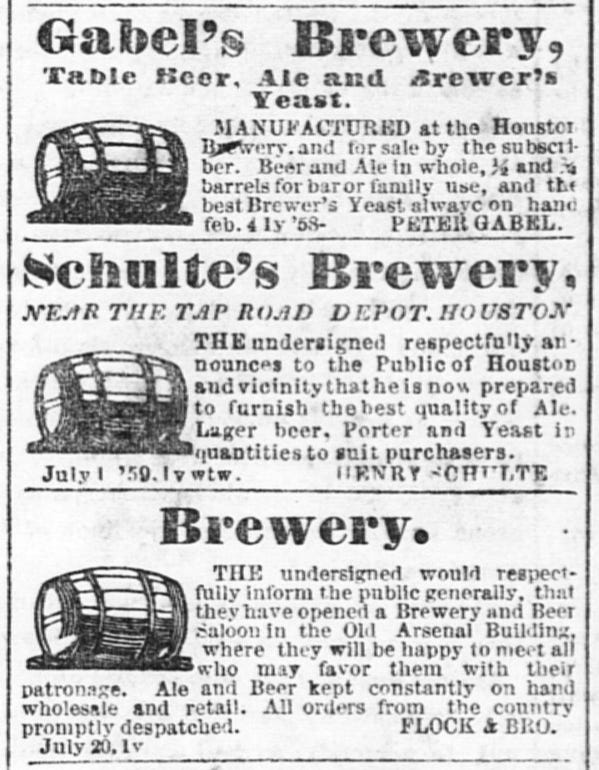
Image 2. The three breweries in 1860 Houston were operated by Peter Gabel, Henry Schulte, and the Floeck brothers. Image source: The Portal to Texas History.
Keep reading with a 7-day free trial
Subscribe to What Are Streets For Newsletter to keep reading this post and get 7 days of free access to the full post archives.