
What Is a "House"? Definitions
From the Oxford English Dictionary

Other Posts in the Series
What Is a “House”? Definitions
What Is a “House”? Hotels and Boardinghouses
What Is a “House”? Provisioning Food
What Is a “House”? Domestic Architecture
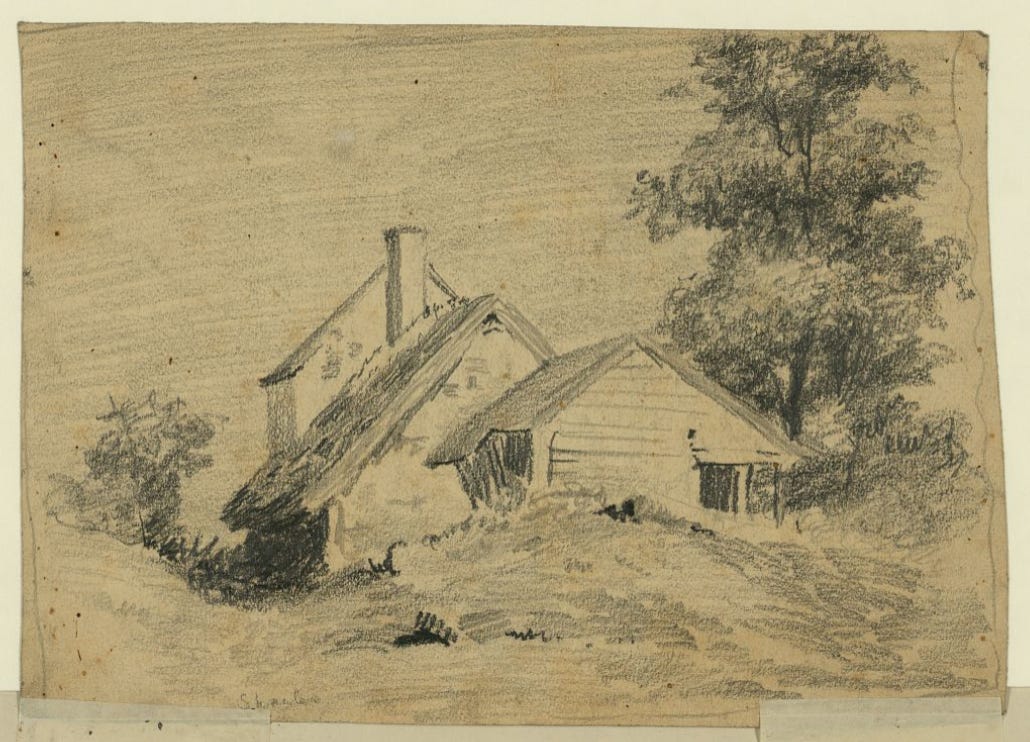
Image 1. C. D. Gedney, “[House],” 1872-1877, drawing. Image source: Library of Congress.
Differences in language are not always quaint curiosities. Sometimes differences in language reveal distinctive social characteristics and are key to understanding the experiences and modes of thinking from a previous era. There are four main findings from the study of newspapers in mid-nineteenth-century Houston:
House is used as a conflation category to refer to any kind of shelter, regardless of its use
While residential use as a category was not always important, when they did distinguish residential use, they used dwelling or dwelling house
Many compounds including house were used, such as warehouse or courthouse, but these were no less houses than dwelling houses
Lodging houses were also dwellings
Various types of hospitality or lodging houses were poorly distinguished
Reference guides such as the Oxford English Dictionary facilitate the understanding of specific meanings of familiar words as they were used in previous eras. This paper is a guide for specific uses of housing terms in order to facilitate interpreting primary materials. It also improves the understanding of housing terms for a particular time and place beyond what is offered from general reference books. While there are good historical narratives which interpret antebellum and post-bellum housing, none explains contemporary vernacular language, and while these are good narratives, there is room for improvement.1
One essential text for understanding some primary sources relevant to the study of mid-nineteenth-century Houston is Margo J. Anderson’s study of the US census. An indispensable text for late-nineteenth-century urban history is Diane Oswald’s history of fire insurance maps. Primary sources such as household-level census records and Sanborn Fire Maps are great historical tools, but sometimes they are difficult to interpret and secondary texts make primary sources more sensible. In the same way, this historiographic essay should make the language of housing from newspaper advertisements a bit more sensible.2
Language changes over time. Sometimes a word expands in meaning. Sometimes an old word is repurposed for reference to a new concept. At other times, new words replace old words for expressing new concepts. Words in any language, however, do not necessarily have uniform usage for all competent users, even given the same time and place. There are national, regional, and local dialects. There are personal idiosyncrasies. Even accounting for these differences among contemporaries, house is a word which changed from the 1800s compared to present-day usage. House is an old word, and its present-day American usage is an example of an old word repurposed to express a newer concept. So there is the question of how the word shifted throughout the English-speaking world, and there is also the question of where American usage, Texan usage, and Houstonian usage lie upon a continuum.
For a present-day definition of house, the online version of the Merriam-Webster Dictionary gives, “a building that serves as living quarters for one or a few families : HOME.” The Oxford English Dictionary (OED) provides a historical perspective on the meanings of terms, including a multi-page exploration of house. Of the many alternatives, there are two which best distinguish the main uses of the word during the nineteenth century as opposed to the twentieth century:3
I. The simple word.
1. A building for human habitation; esp. the building that is the ordinary dwelling-place of a family
2. A building for human occupation, for some other purpose than that of an ordinary dwelling. {Usually with defining prefix: see ALMSHOUSE….}
b. A place of worship…
c. A building for the entertainment of travelers or of the public generally, an inn, a tavern. (See also ALE-HOUSE, COFFEE-HOUSE, EATING-HOUSE, PUBLIC HOUSE, etc.)….
For example, Edwin Tunis, Colonial Craftsmen and the Beginnings of American Industry (Baltimore: Johns Hopkins University Press, 1965) is a historiographical work explaining the contemporary meanings of occupations for the colonial era. Bnjd, “The Language of Housing in Houston,” 24 August 2021, What Are Streets For
Margo J. Anderson, The United States Census: A Social History (New Haven: Yale University Press, 2015), Second Edition; Diane L. Oswald, Fire Insurance Maps: Their History and Applications (College Station: Lacewing Press, 2005).